


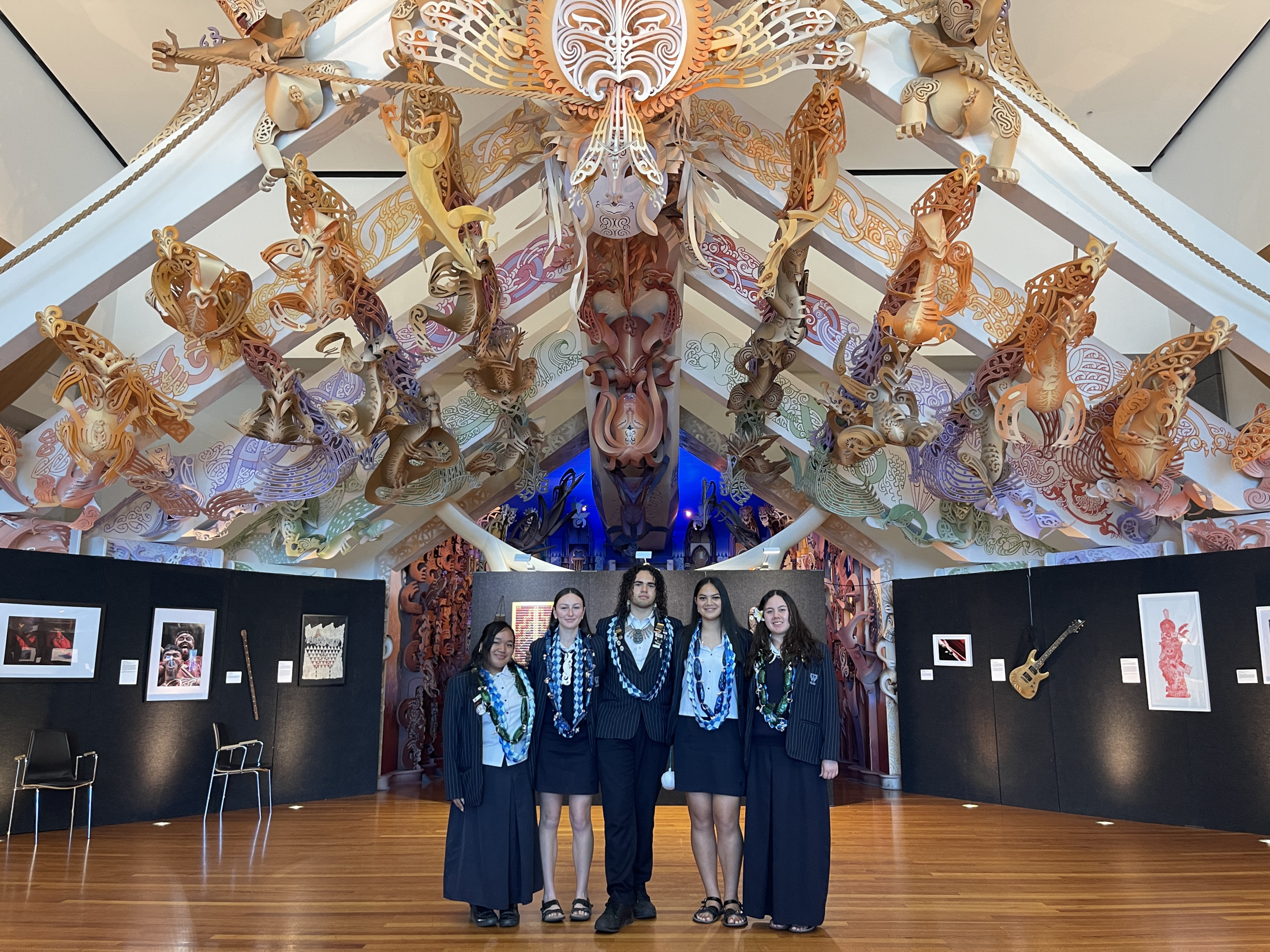
Ringa Toi - Te Papa
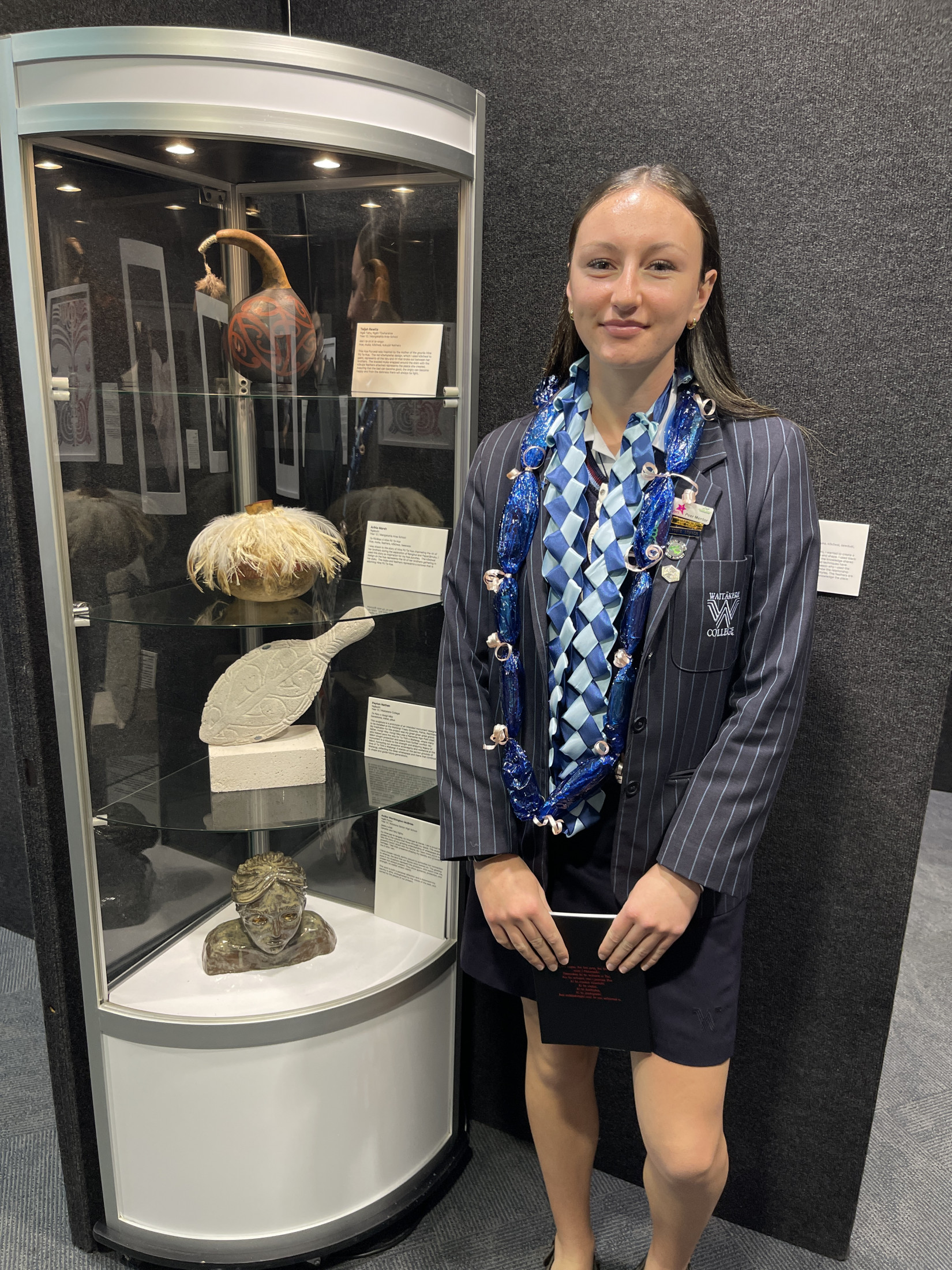
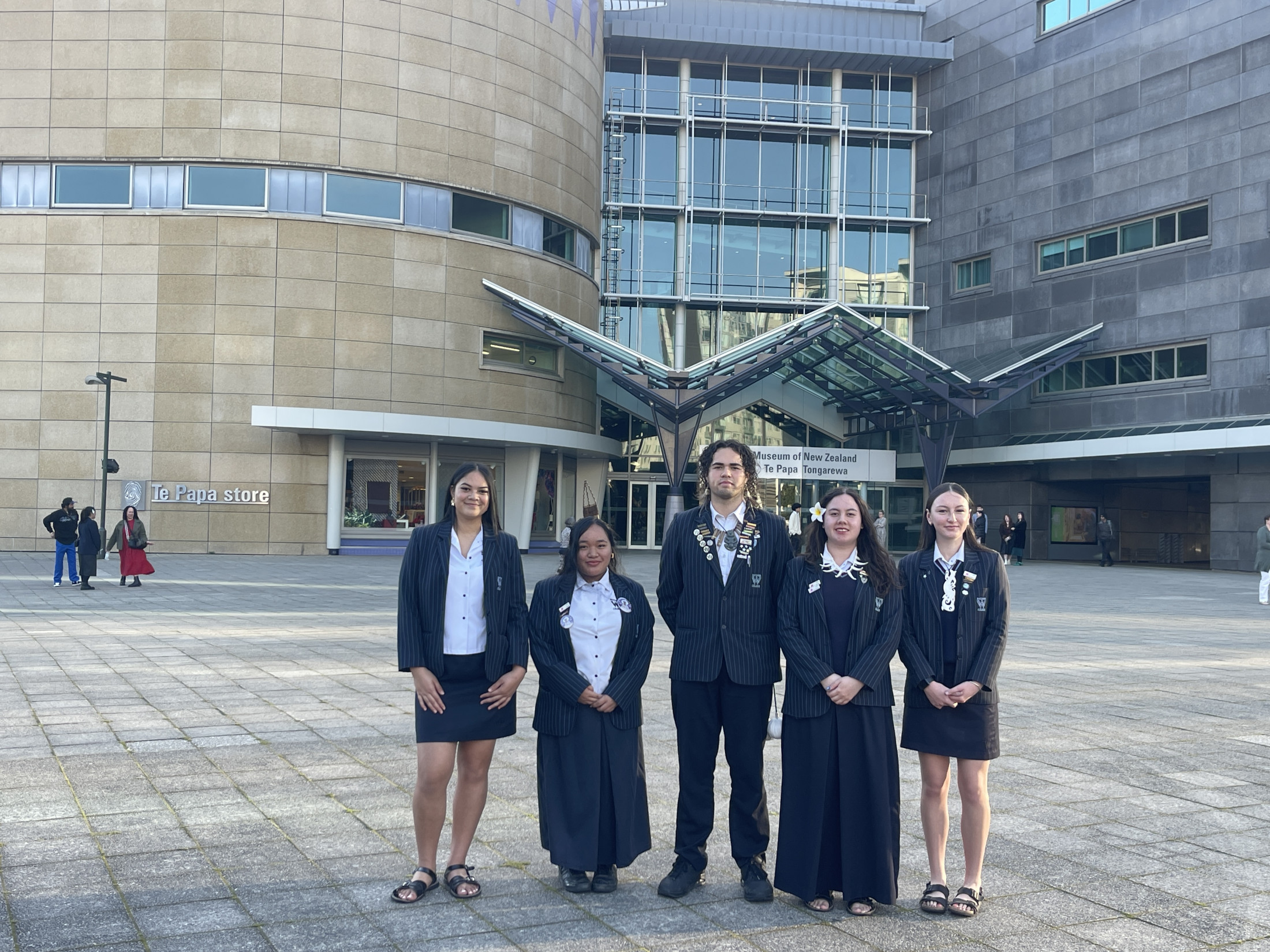
We had five students selected for Ringa Toi Ringa Toi, which is an annual exhibition that showcases the artwork of secondary school students with a focus on Toi Māori and Pacific Arts at an excellence level. It also provides a platform to advance the use of mātauranga Māori and Pacific knowledge and is a tool to accelerate Māori and Pacific learner success. Taipua Kipa had three works in the show and Kiana Uiti, Peyton Nathan, Adria Gawn and Lohaina Teleai Tiapapa Soo all had work on show at The Museum of New Zealand Te Papa Tongarewa.
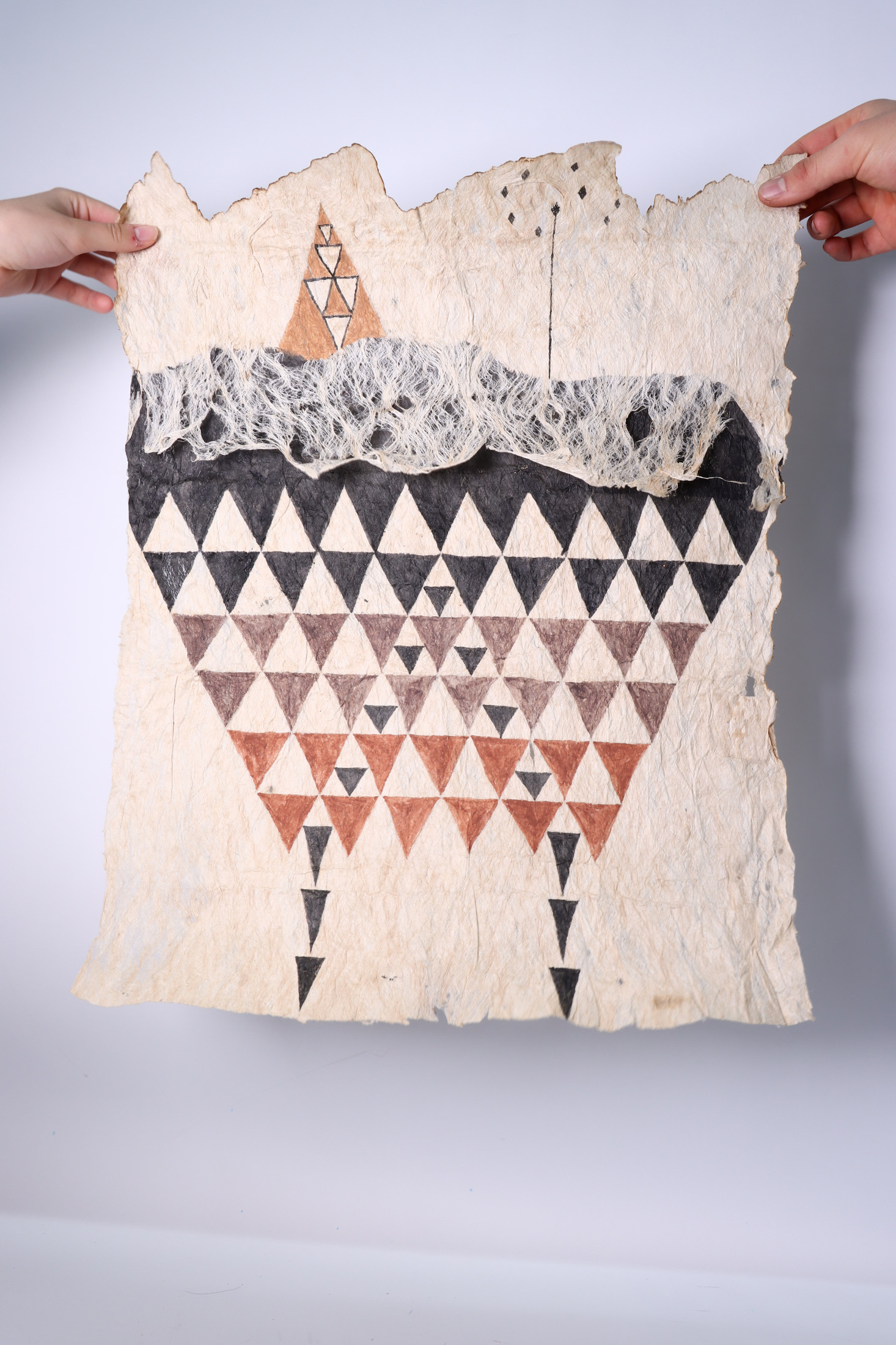
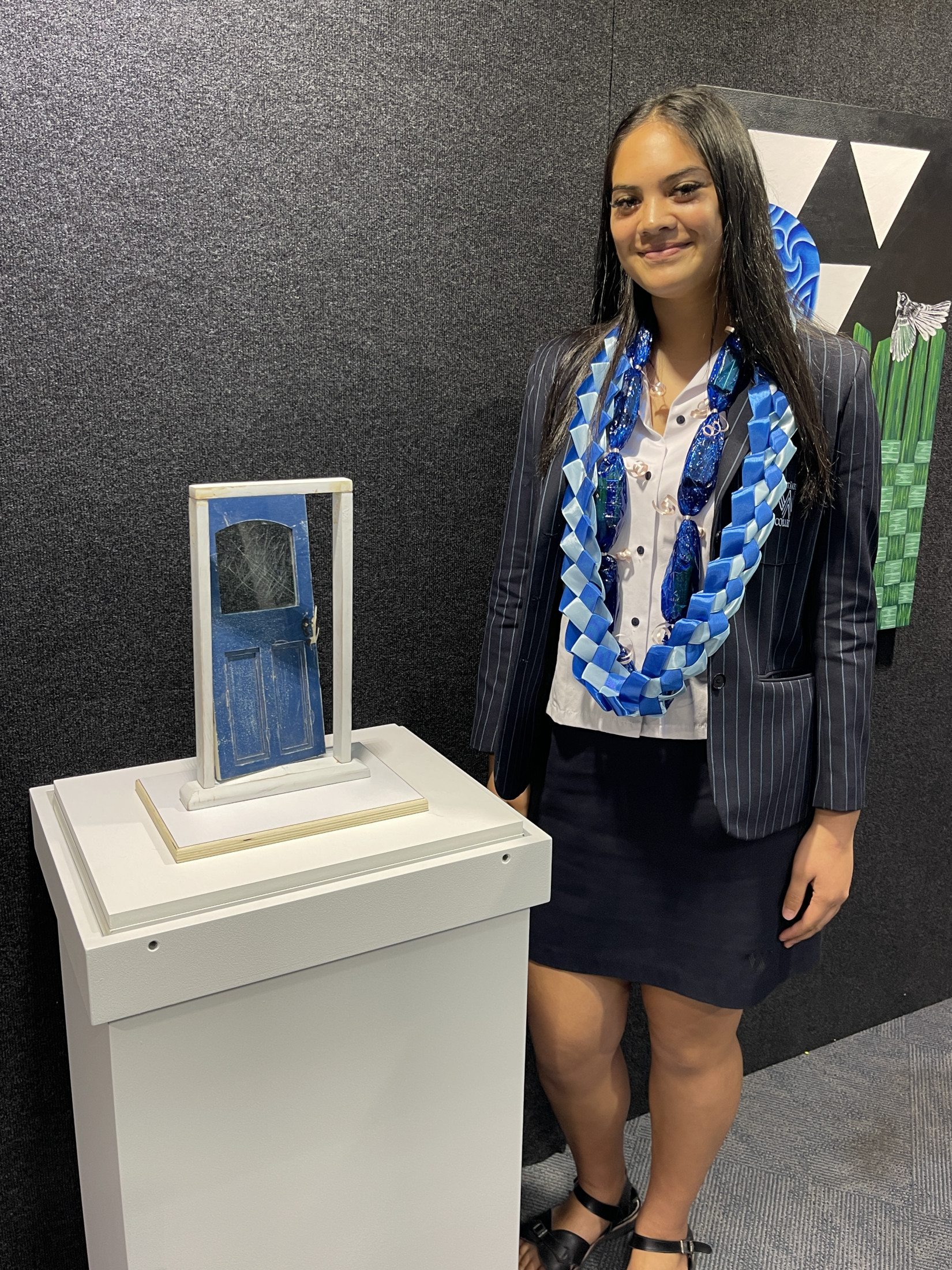
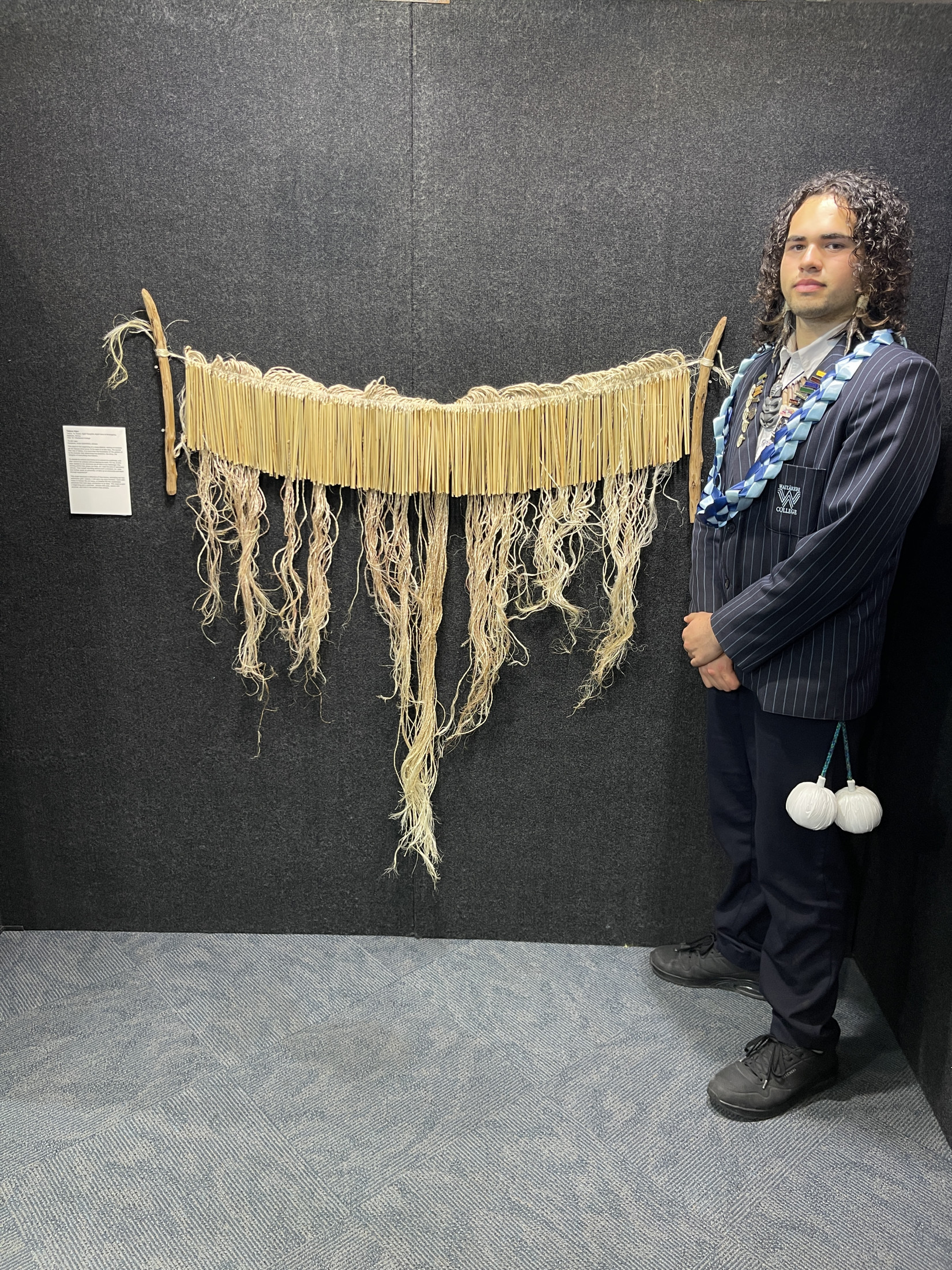
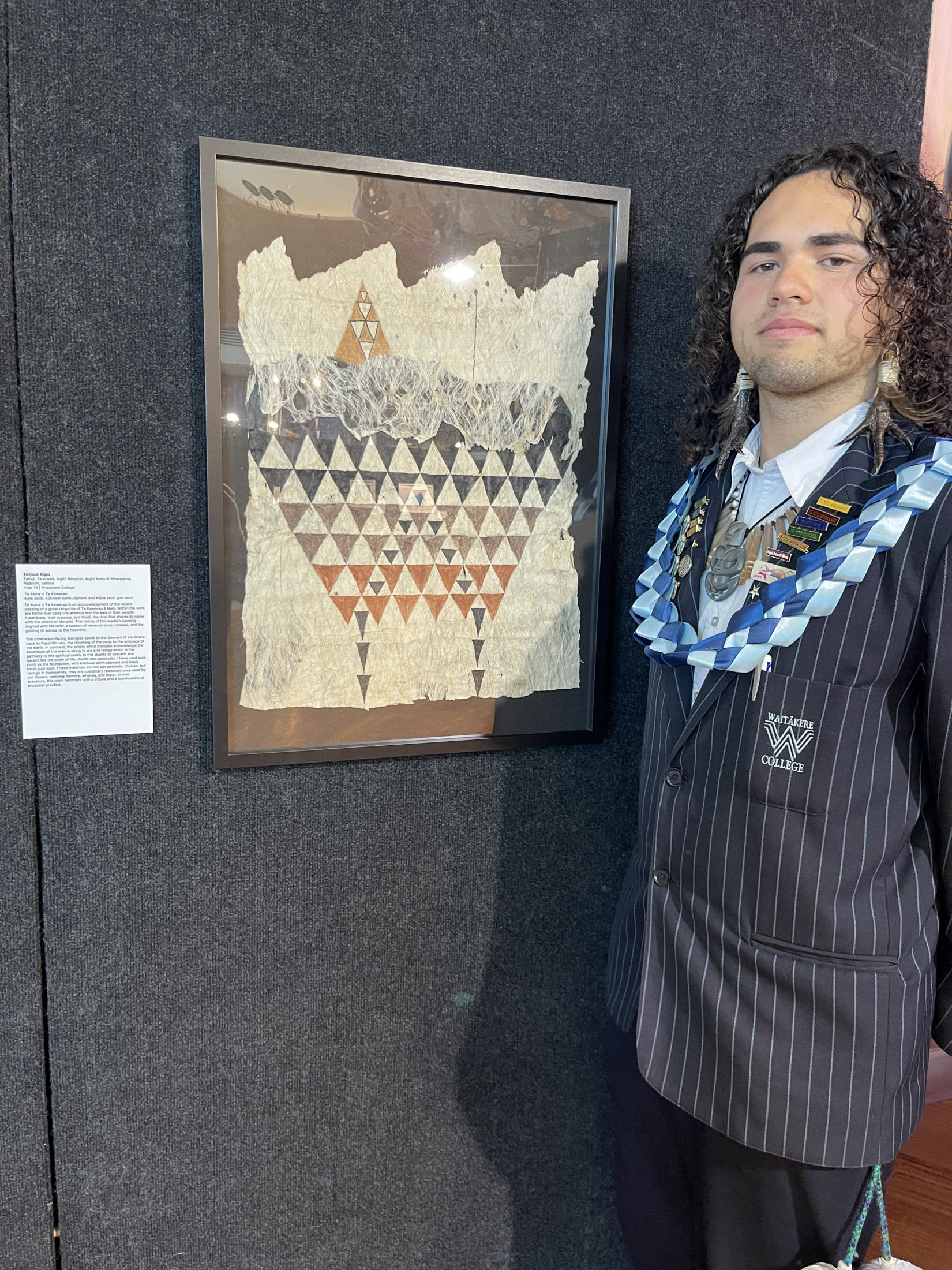
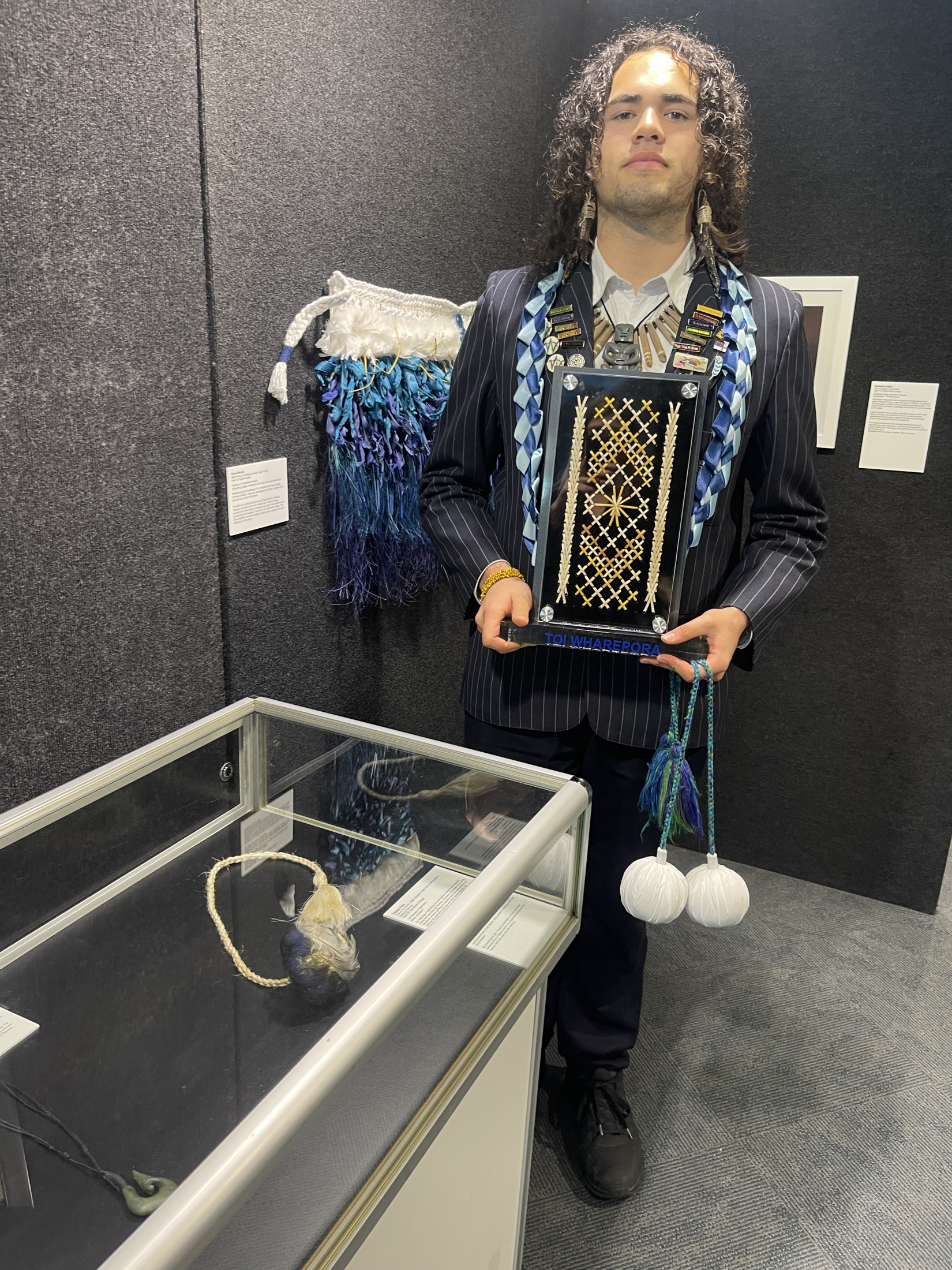
We flew down to Wellington and explored for the day, then attended the awards ceremony, artist workshops and behind the scenes tours of Te Papas Māori and Pasifika collections. We placed in three of the categories, with Taipua Kipa being awarded Commended in the Toi Waituhi Category for his work Te Mana Te Kawerau, a painting on Aute Cloth using Kokowai he made himself, and Highly commended in the Toi Wharepora Category for his work Te Pakanga Nga Manu, a stunning poi using Muka, Huruhuru and various feathers. Adria Gawn was also awarded Commended in the Moana Pasifika Category for her work Opening to the beginning, a small-scale marquette of a smashed in door signifying the dawn raids her family experienced.
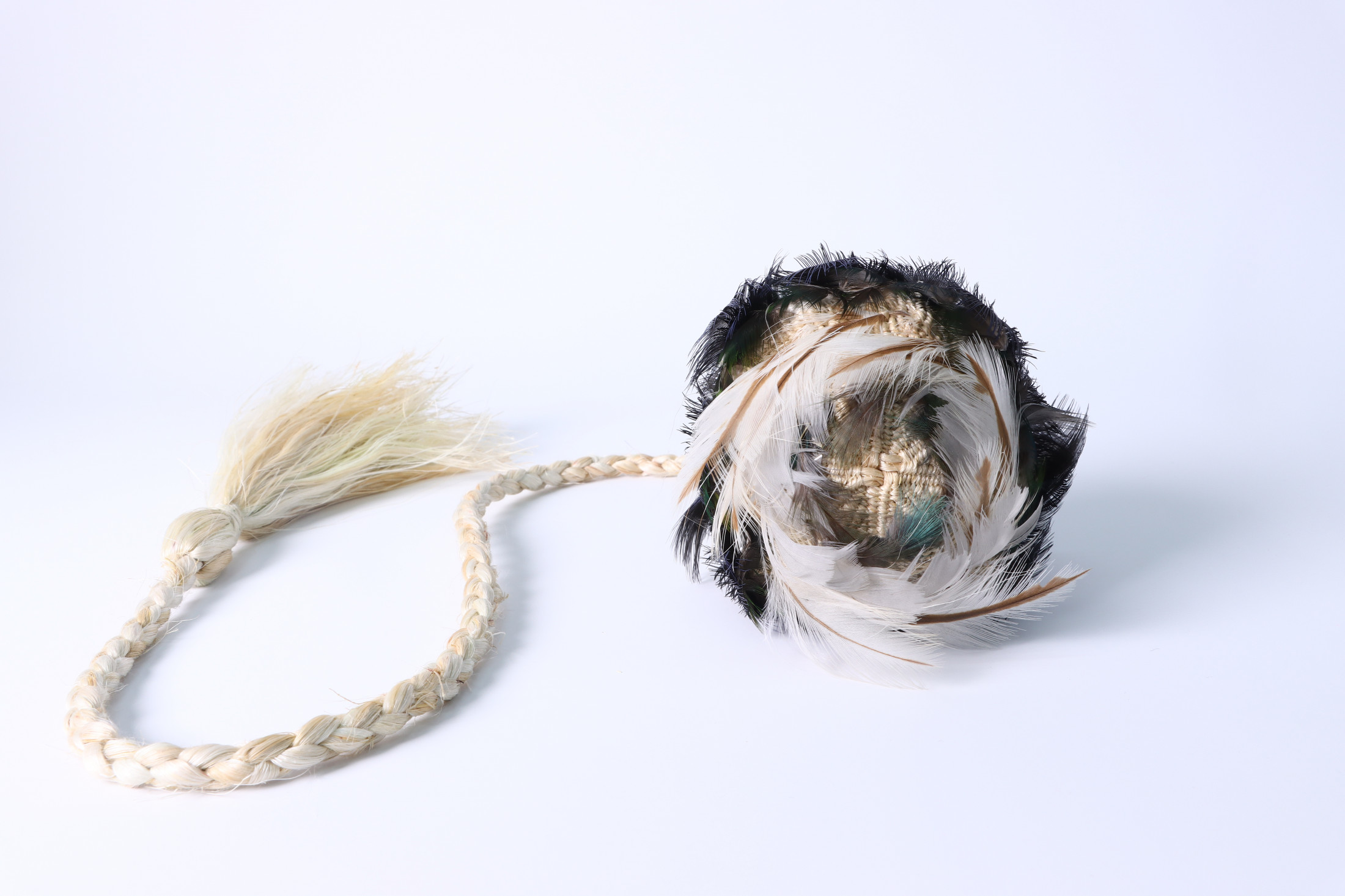
Taipua Kipa
Te Pakanga o Ngā Manu(POI) - Highly Commended
muka, huruhuru
Te Pakanga o Ngā Manu is a poi kaitara crafted from harakeke muka and adorned with feathers. Its name, the Battle of the Birds, recalls an ancient pūrākau of seabirds and land birds clashing in warfare for authority over sea and land. Within this poi, the feathers of kōtare, kāhu, tarāpunga, kererū, and pūkeko embody the mana and voices of the manu themselves. Traditionally, poi made from muka held deep cultural significance, with long poi sometimes used by tohunga in karakia. Their rhythmic movement became a bridge between the spiritual and physical realms, carrying intention and focus. These practices remind us of the depth and purpose found within customary arts. Today, however, many contemporary poi are made from non-biodegradable materials that contribute to pollution and environmental harm. This stands in contrast to the sustainable, natural practices of our tūpuna, who worked in harmony with the environment. By creating this poi, I hope to shed light on those ancestral methods and to inspire a return to sustainable practices that honour both the atua and the whenua.
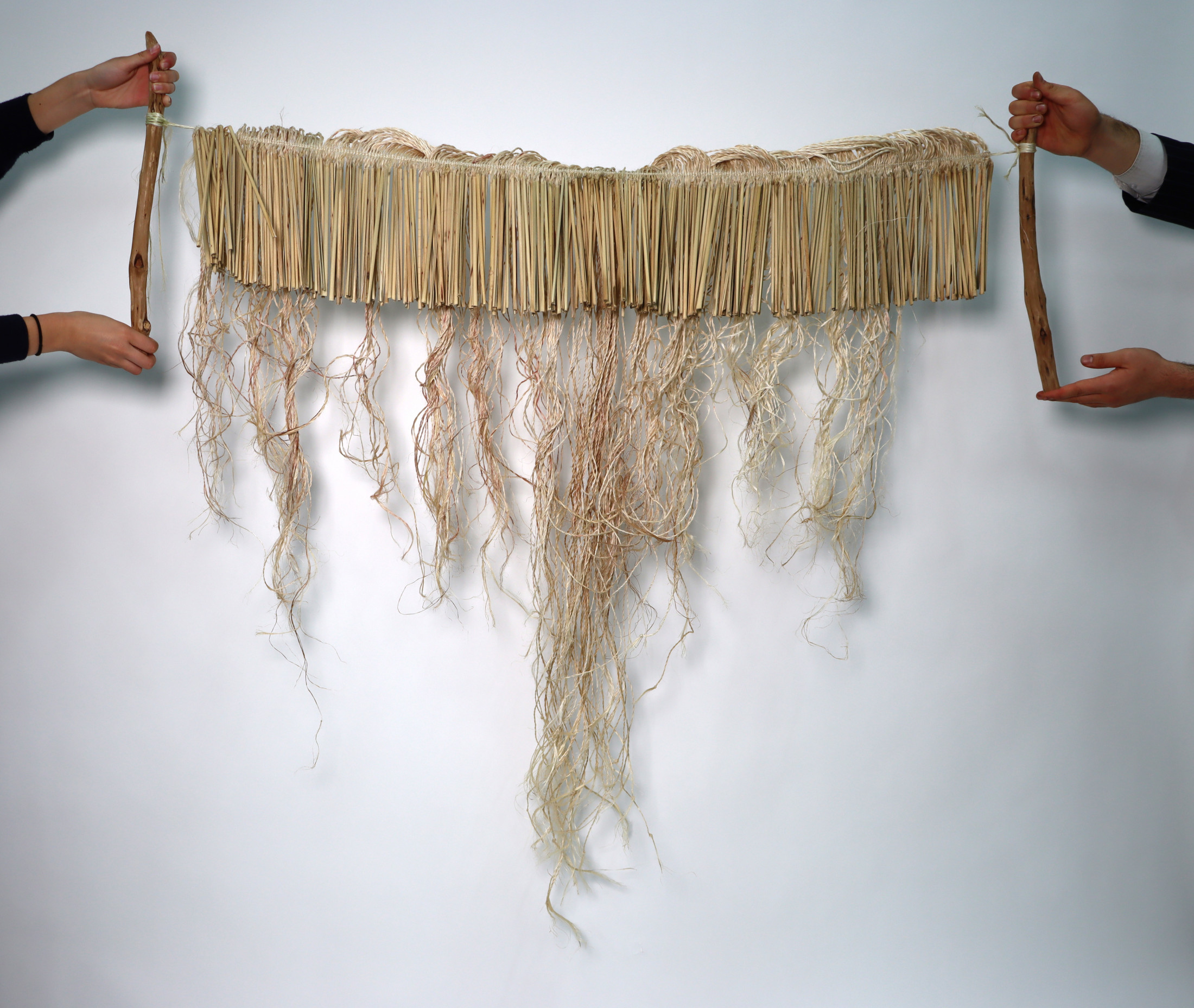
Taipua Kipa
Te aho tapu (cloak):
harakeke/ muka (pōkinikini), kānuka
This piece is the beginning of a muka kākahū, resting on turuturu as our tūpuna once wove. At its heart is te aho tapu, the sacred first row of tāniko. It is more than the foundation of the pattern; it is the moment that determines the direction, the story, the integrity of everything that follows. To decide its colours and forms is to commit to a pathway, one that cannot be undone without leaving its mark. For me, te aho tapu speaks to the decisions we all face in our haerenga—the turning points that shape our lives. As I near the end of secondary school, I find myself standing before such a moment. Do I step into further study at university, or take up an internship and learn through experience? This cloak becomes a reflection of that choice, reminding me that whichever path I weave, it will carry my story forward. I work with muka to honour the old ways, to breathe life into sustainable practices that hold deep connection to te taiao. This cloak is both a beginning and a reminder; choose with care, weave with purpose, and trust in the pattern that unfolds.
Taipua Kipa
Te Mana o Te Kawerau (tapa cloth painting triangles) - Commended
Te Mana o Te Kawerau is an acknowledgement of the recent passing of a great rangatira of Te Kawerau ā Maki. Within the work are forms that carry the whenua and the awa of their people: Puketōtara, their maunga, and Waitī, the river that shares its name with the whetū of Matariki. The timing of this leader’s passing aligned with Matariki, a season of remembrance, renewal, and the guiding of wairua to the heavens. The downward-facing triangles speak to the descent of the tīnana back to Papatūānuku, the returning of the body to the embrace of the earth. In contrast, the empty white triangles acknowledge the ascension of the wairua along te ara o te reinga, which is the pathway to the spiritual realm. In this duality of descent and ascent lies the cycle of life, death, and continuity. I have used aute cloth as the foundation, with kōkōwai earth pigment and kāpia kauri gum soot. These materials are not just aesthetic choices, but taonga in themselves; they are customary resources once used by our tūpuna, carrying memory, whenua, and mauri. In their presence, this work becomes both a tribute and a continuation of ancestral practice.
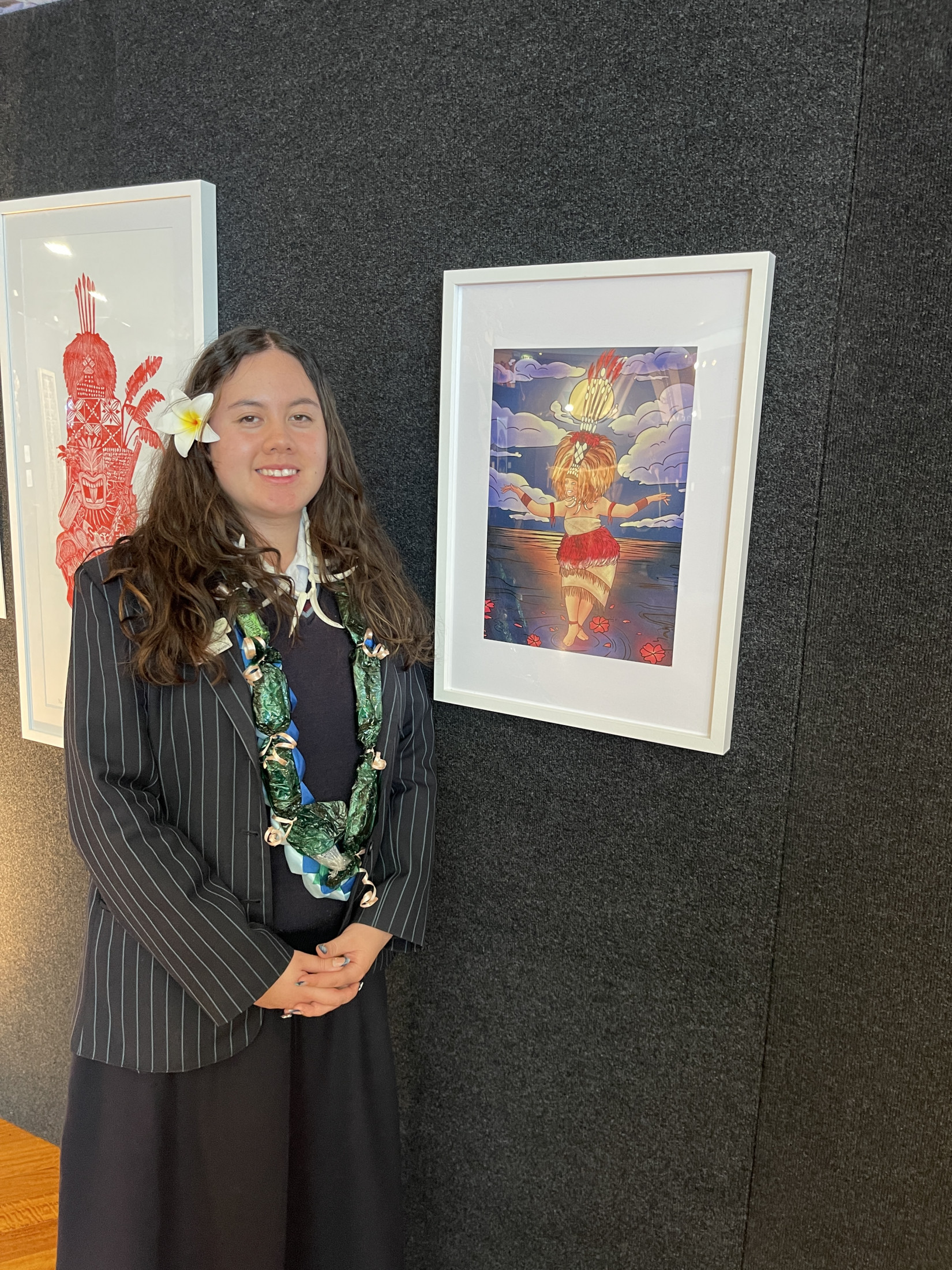
Kiana Uiti
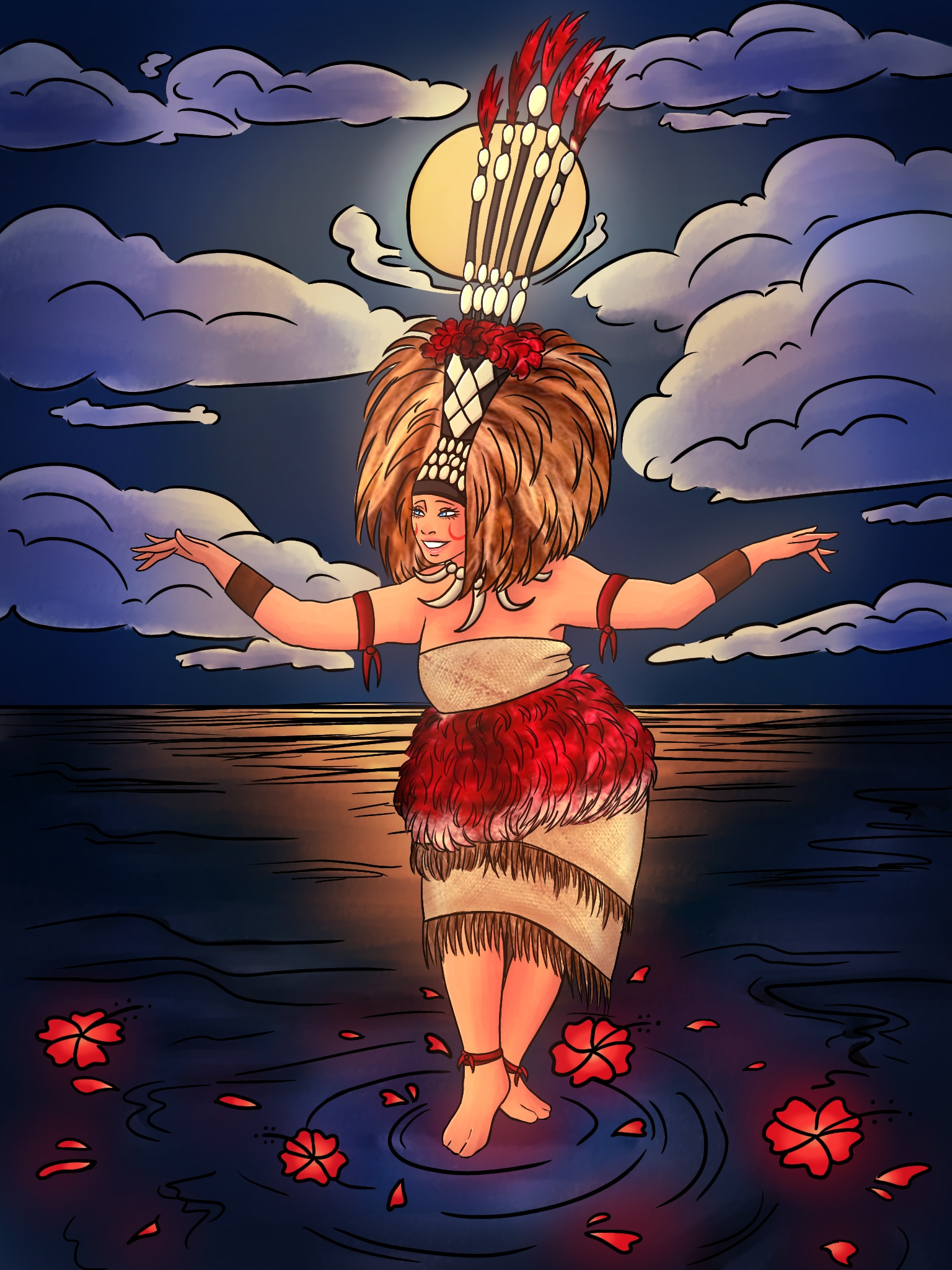
Measina
Digital Print
I have made this artwork because I am a proud Samoan woman who cherishes my culture and the art of Siva. I wanted to display this by having a woman dancing over water, showcasing her beauty and gracefulness. I used an ocean backdrop to connect her with the natural waters and to make her stand out against the landscape.
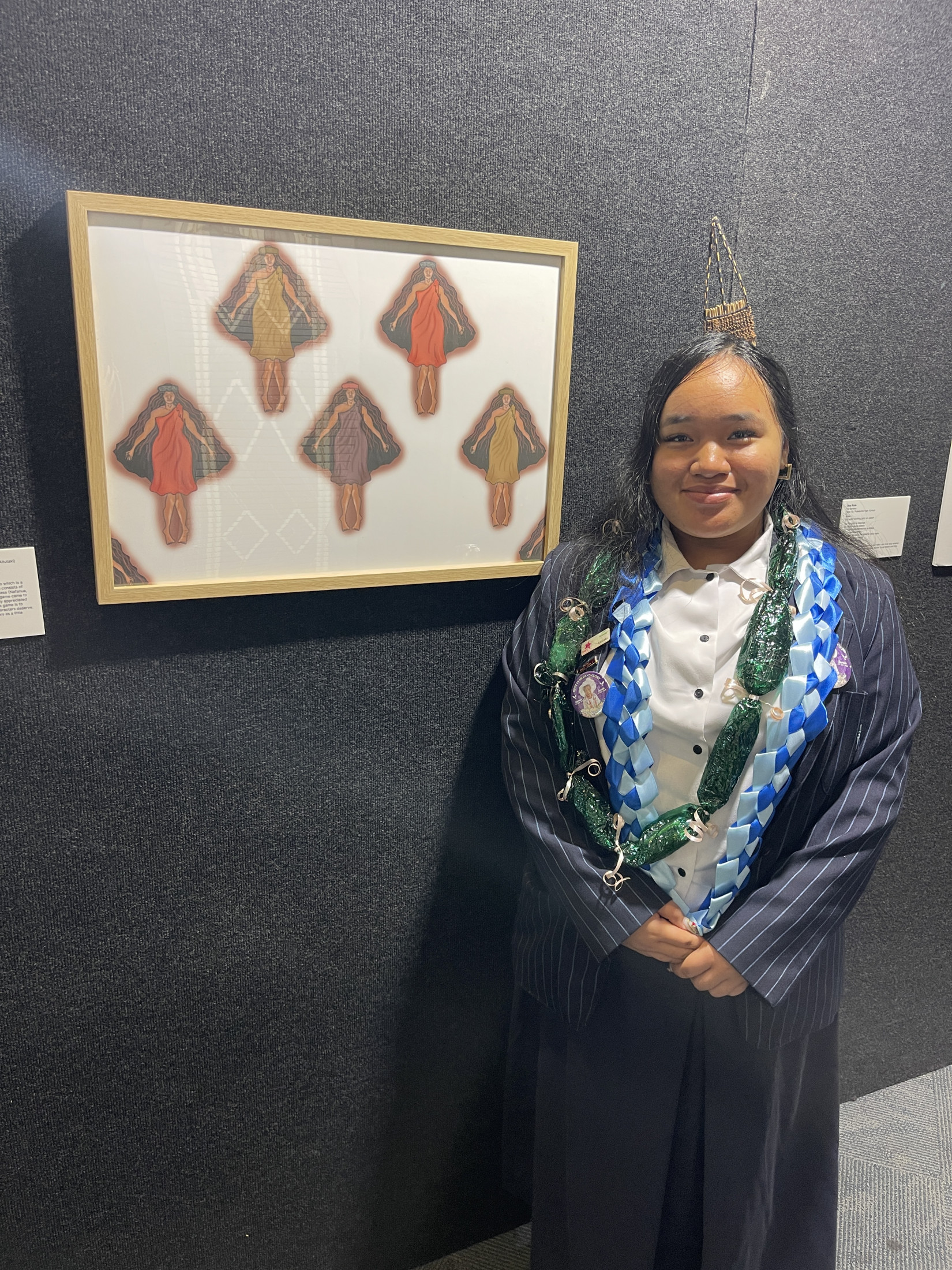
Lohiana Tiapapa Soo
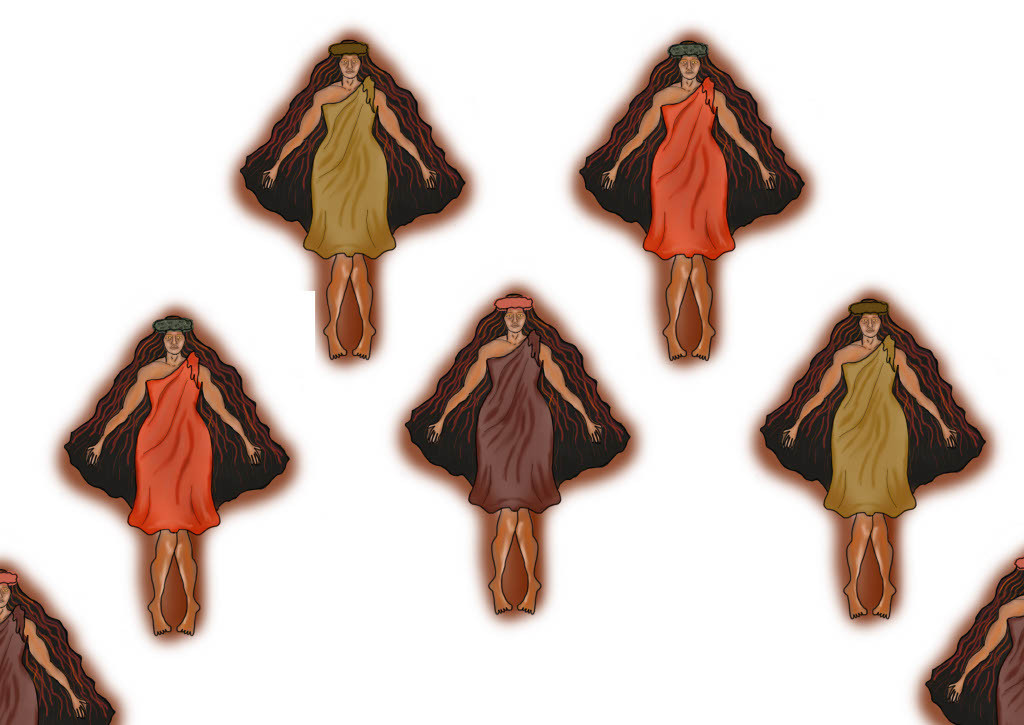
Island Rumble: The Divine Showdown
Digital Print
This art piece is a part of my current design portfolio, which is a Polynesian street fighter-inspired game. This game consists of three starting characters that are Polynesian goddesses (Nafanua, Pele, Mahuika). The idea of creating a Polynesian game came to me as I don't believe that Polynesian culture is fully appreciated and acknowledged as it should be. My aim for this game is to accurately give that representation that these characters deserve. I wanted to display the profiles of these characters as a little sneak peek.
Peyton Nathan
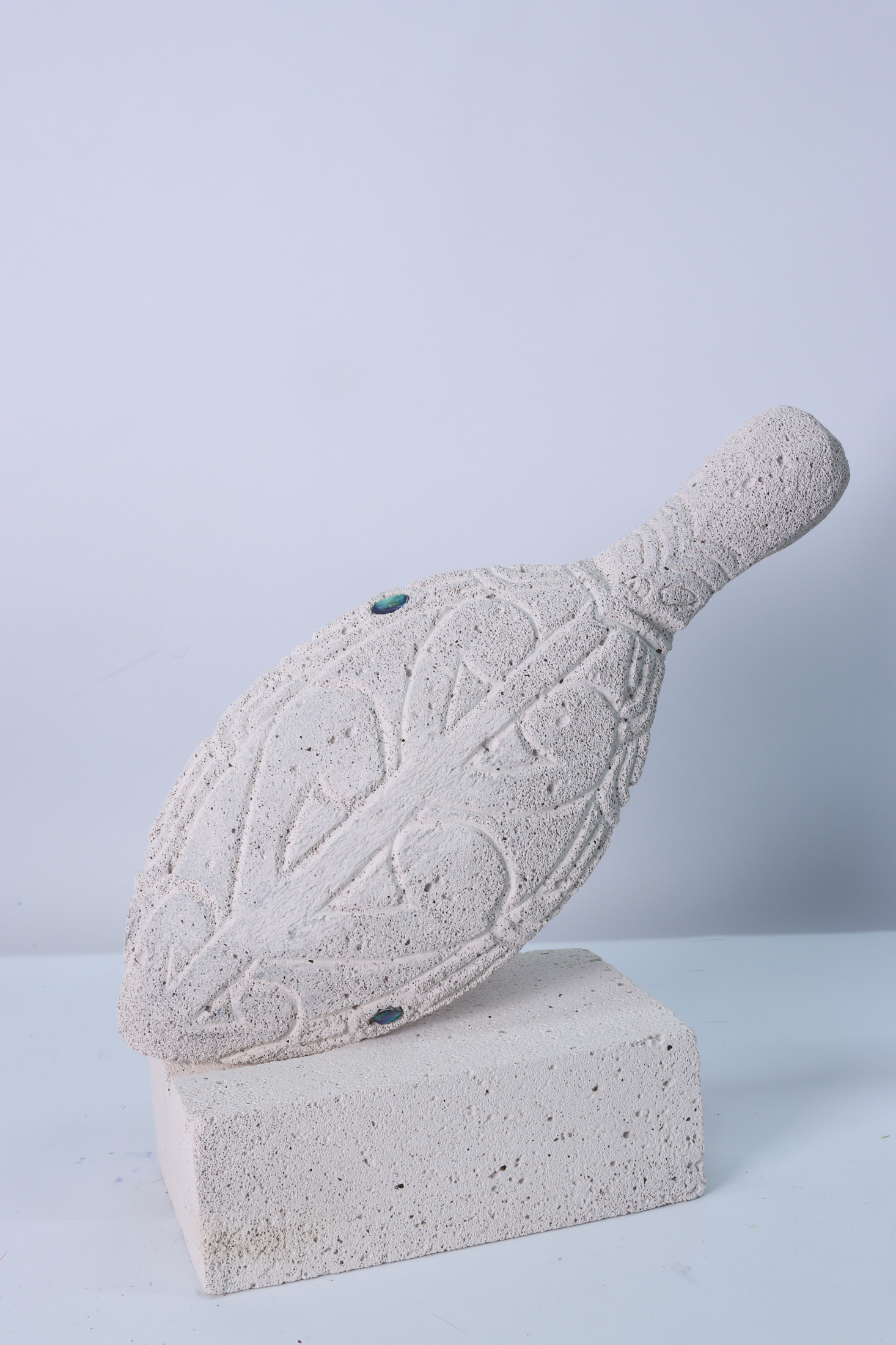
Te Patu o Hongi Hika
Sandstone and paua
This sculpture is a prototype of an intended monument designed to be installed at the Waitangi Treaty Grounds, Paihia, Northland. My inspiration for this project was my great-great-great-grandfather, Hongi Hika. Hongi Hika was a fearsome Nga-Puhi chief who helped pave the way for Te Tiriti o Waitangi, where many Māori sought protection and peace from further conflict. My monument is a tribute to the strength and enduring legacy of Māori, honouring our ancestral sovereignty and resilience at the time of Te Tiriti o Waitangi. It stands on the sacred grounds of Waitangi, reflecting the deep whakapapa and mana that continue to shape and guide future generations.
Adria Gawn
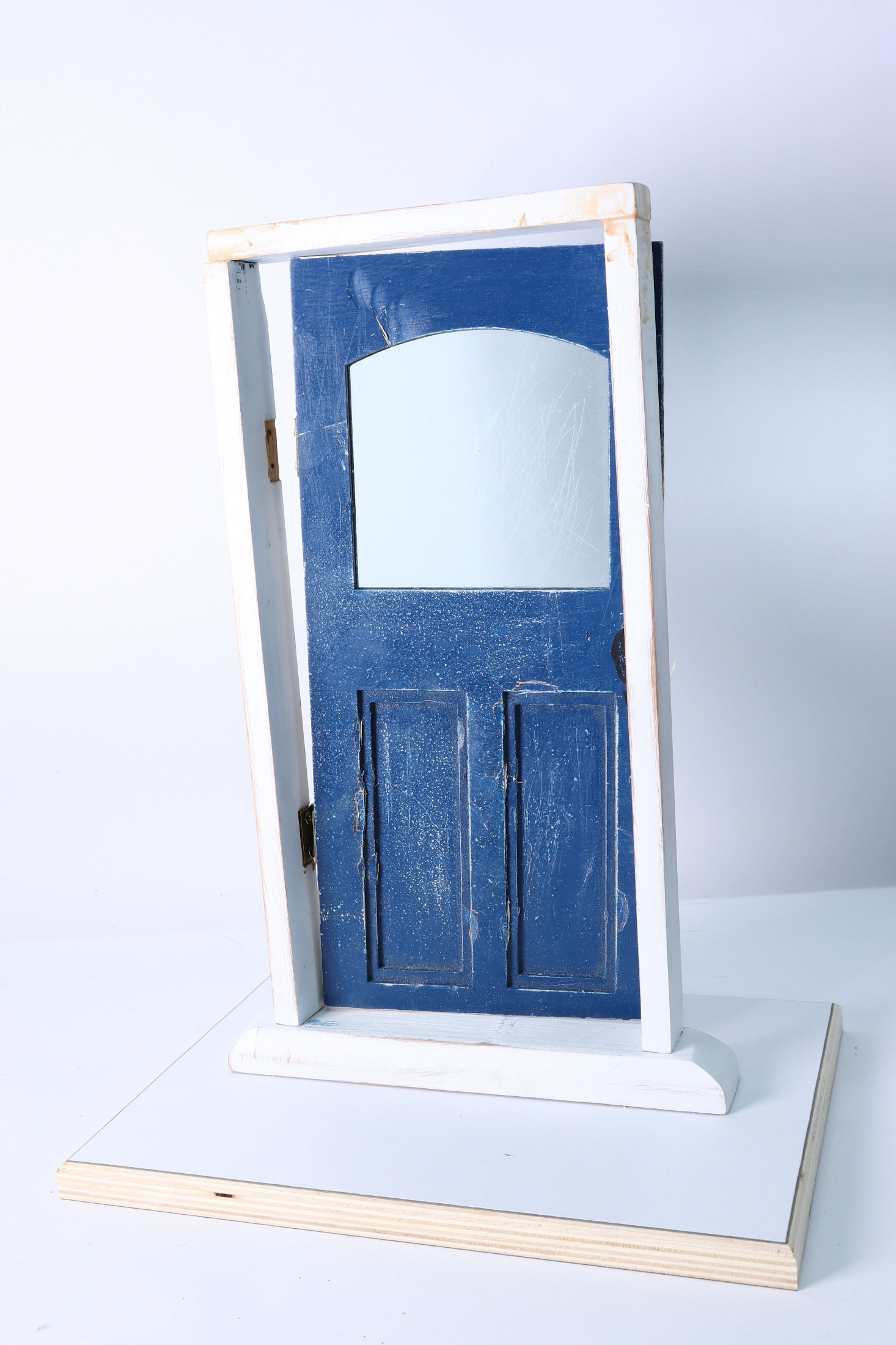
Opening to the beginning - Awarded Commended
Wood, Plastic, Metal, Spray Paint
This sculpture is a prototype of a monument designed to be installed in Western Park, Ponsonby, Tamaki Makaurau. It was designed to commemorate all Polynesians who endured the Dawn Raids. My inspiration for this project is my Mother, who as a teenager, experienced first hand her home being raided by the New Zealand Police force. This would go on to happen multiple times throughout my Mother's younger years. With my monument, I aim to show acknowledgement to the racially motivated tribulations my mother and our Polynesian community faced, and ensure their story is never forgotten.


 42 Rathgar Rd